Progesterone Saliva ELISA
- Regulatory Status
- RUO
- Kit size
- 12 x 8 Tests
- Method
- ELISA
- Incubation time
- 1 x 1h, 1 x 30min
- Standard range
- 25 - 5000 pg/mL
- Specimen / Volumes
- 50 µL Saliva
- Substrate / isotope
- TMB, 450 nm






Enzyme immunoassay for the quantitative determination of progesterone in human saliva. For research use only. Not for use in clinical diagnostic procedures.
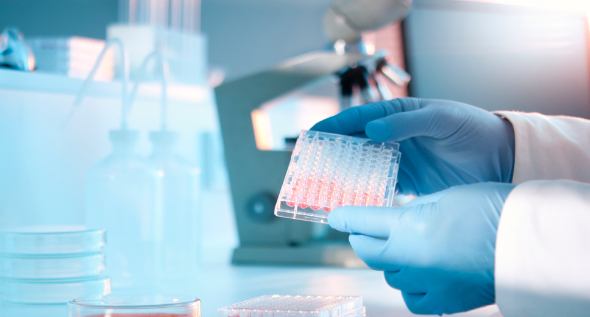
Solid phase enzyme-linked immunosorbent assay (ELISA) based on the competition principle. An unknown amount of antigen present in the sample and a fixed amount of enzyme labelled antigen compete for the binding sites of the antibodies coated onto the wells. After incubation the wells are washed to stop the competition reaction. After the substrate reaction the intensity of the developed colour is inversely proportional to the amount of the antigen in the sample. Results of samples can be determined directly using the standard curve.
The new IBL International Progesterone Saliva ELISA requires as low as 50 µL Saliva sample volume and has a broad standard range up to 5,000 pg/mL.
Our Saliva ELISA product line has been revised so that the main steroids (testosterone, progesterone, DHEA) may be processed in a similar way:
Thanks to the similar processing and assembling, the assays can easily be performed in combination.
Due to the pulsatile dynamics of steroid secretion repeated saliva sampling is recommended. IBL recommends collecting 3 to 5 saliva samples within 2 hours. In the laboratory, equal volumes of the individual saliva samples can be mixed. This mixed sample results in a mean free Progesterone value, which represents the active hormone concentration in a reproducible way.
For concrete data please consult the Instruction for Use in the download box on the top right side.
Our comprehensive immunoassay portfolio includes a number of specialty diagnostic immunoassays for endocrinology, immunology and autoimmunity, as well as for diagnosis of multiple infectious diseases. We are pioneers and market leaders in saliva diagnostics, with over 40 years of experience supplying a broad portfolio of luminescence- and ELISA-based tests, including our highly acclaimed HMGB1 and MuSK-Ab ELISAs.
And as experts in laboratory automation, we can support our customers with the protocols for open ELISA platforms.
All products are only available for sale to laboratory professionals and may not be available in all countries. Availability and regulatory status may vary across regions depending on local country-specific registration. Please always read and follow the instructions for use.
All of our assays have been designed and manufactured to meet the highest global regulatory requirements and quality standards. Tecan is certified under ISO 9001:2015, ISO 13485:2016 and is audited by a notified body according to Medical Device Single Audit Program (MDSAP).
As part of the Tecan Group, we have a leading market position in diagnostics and research, with over 40 years of experience in the development, manufacture and supply of enzyme-, radiolabel- and luminescence-based immunoassays.
Our range of high-quality immunoassays is supported by a diverse portfolio of automated solutions, making us the perfect partner for you and your customers.
At Tecan, we are driven to improve people’s lives and health.