Toxoplasma gondii IgG ELISA
- Regulatory Status
- EU: CE
- Kit size
- 12 x 8
- Method
- ELISA
- Incubation time
- 1 x 1 h, 2 x 30 min
- Standard range
- 0 - 200 IU/mL, borderl. 30 - 35 IU/mL
- Specimen / Volumes
- 10 µL serum, plasma
- Substrate / isotope
- TMB 450 nm






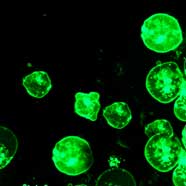
Toxoplasma gondii is a small intracellular parasite, whose live cycle has a sexual and an asexual phase. Sexual development is restricted to the intestinal cells of (probably exclusively) cats; the oocysts formed are excreted and due to their resistant cell walls they may be infectious under advantageous circumstances for at least 1 year. Animals and man are intermediate hosts for the asexual proliferation of T. gondii: the ingested parasites will proliferate explosively within the host cells lysing them eventually. They disseminate throughout the body via circulation and lymphatic system and though may infect any cell type. In muscle and brain cells cysts are formed which are spheroidal and about 5-100 µm in diameter. Cysts are virtually immortal in the intermediate host. Toxoplasma gondii is the most common parasite in humans, but its abundance (7-80 %) is highly dependent on the geographic area, the socio-economic status and the nutritional customs. Infection only rarely causes toxoplasmosis and usually clinical symptoms are absent, but may produce severe problems in immunosuppressed persons and fetus. Because only a primary infection during pregnancy may be dangerous and even fatal for the unborn (the probability of congenital infection is about 50 %), the recent onset of an infection must be excluded. In pregnant women in over 98 % of cases, the absence of IgM excludes the possibility of recent infection. In newborns the very presence of anti-toxoplasma IgM is sufficient to confirm a congenital toxoplasmosis, since maternal IgM, unlike IgG, does not cross the placental barrier. But a significant number of infected infants do not develop detectable IgM levels and thus are false negative. In immunosuppressed patients toxoplasmosis causes severe complications mostly by reactivation of an earlier latent infection. Infection may be identified by
For concrete data please consult the Instruction for Use in the download box on the top right side.
Our comprehensive immunoassay portfolio includes a number of specialty diagnostic immunoassays for endocrinology, immunology and autoimmunity, as well as for diagnosis of multiple infectious diseases. We are pioneers and market leaders in saliva diagnostics, with over 40 years of experience supplying a broad portfolio of luminescence- and ELISA-based tests, including our highly acclaimed HMGB1 and MuSK-Ab ELISAs.
And as experts in laboratory automation, we can support our customers with the protocols for open ELISA platforms, such as the Freedom EVOlyzer or Thunderbolt®.
All products are only available for sale to laboratory professionals and may not be available in all countries. Availability and regulatory status may vary across regions depending on local country-specific registration. Please always read and follow the instructions for use.
All of our assays have been designed and manufactured to meet the highest global regulatory requirements and quality standards. Tecan is certified under ISO 9001:2015, ISO 13485:2016 and is audited by a notified body according to Medical Device Single Audit Program (MDSAP).

As part of the Tecan Group, we have a leading market position in diagnostics and research, with over 40 years of experience in the development, manufacture and supply of enzyme-, radiolabel- and luminescence-based immunoassays.
Our range of high-quality immunoassays is supported by a diverse portfolio of automated solutions, making us the perfect partner for you and your customers.
At Tecan, we are driven to improve people’s lives and health.