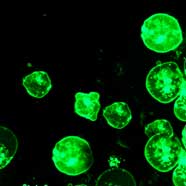
Aspergillus fumigatus IgM ELISA
- Regulatory Status
- EU: CE
- Kit size
- 12 x 8
- Method
- ELISA
- Incubation time
- 1 x 1 h, 1 x 30 min, 1 x 15 min
- Standard range
- cut-off index
- Specimen / Volumes
- 10 µL serum, plasma
- Substrate / isotope
- TMB 450 nm






Enzyme immunoassay for the qualitative determination of IgM class antibodies against Aspergillus fumigatus in human serum or plasma (citrate, heparin). Aspergillus fumigatus is a fungus of the genus Aspergillus, and is one of the most common Aspergillus species to cause disease in individuals with an immunodeficiency. A. fumigatus, a saprotroph widespread in nature, is typically found in soil and decaying organic matter. Colonies of the fungus produce thousands of small conidia (2-3 μm) that readily become airborne. The fungus is capable of growth at temperatures up to 50 °C, with conidia surviving at 70 °C. Humans are continuously in contact with these asexual spores and it is estimated that an individual inhales several hundred conidia each day; typically these are quickly eliminated by the immune system. Aspergillosis develops mainly in individuals who are immunocompromised, either from disease or from immunosuppressive drugs, and is a leading cause of death in acute leukemia and hematopoietic stem cell transplantation. The term aspergillosis comprises a number of different diseases caused by fungi of the genus Aspergillus. The most common forms are allergic bronchopulmonary aspergillosis (ABPA), pulmonary aspergilloma and invasive aspergillosis (IA). Allergic bronchopulmonary aspergillosis is characterized by an exaggerated response of the immune system to Aspergillus species. It occurs in patients suffering from asthma or cystic fibrosis. Clinically, ABPA manifests as a bronchial asthma with transient pulmonary infiltrates that may proceed to proximal bronchiectasis and lung fibrosis. Aspergilloma, commonly referred to as “fungus ball,” occurs in preexisting pulmonary cavities that were caused by tuberculosis, sarcoidosis, or other bullous lung disorders. The fungus settles in a cavity and grows until it forms a compact sphere, which incorporates dead tissue from the surrounding lung, mucus, and other debris. Patients are usually asymptomatic and often co-exist for decades with aspergillomae prior to incidental diagnosis. However, it may cause hemoptysis. Invasive aspergillosis is a rapidly progressive, often fatal disease, targeting severely immunocompromised patients, including those with hematological malignancies such as leukemia, those who have received solid organ or hematopoietic stem cell transplants, and individuals with chronic granulomatous disease or advanced AIDS. IA is characterized by invasion of blood vessels, resulting in multifocal infiltrates. Dissemination to other organs, particularly the central nervous system, may occur. The qualitative immunoenzymatic determination of IgM-class antibodies against Aspergillus fumigatus is based on the ELISA (Enzyme-linked Immunosorbent Assay) technique. Microtiter strip wells are coated with Aspergillus fumigatus antigens to bind corresponding antibodies of the specimen. After washing the wells to remove all unbound sample material horseradish peroxidase (HRP) labelled anti-human IgM conjugate is added. This conjugate binds to the captured Aspergillus fumigatusspecific antibodies. The immune complex formed by the bound conjugate is visualized by adding Tetramethylbenzidine (TMB) substrate which gives a blue reaction product. The intensity of this product is proportional to the amount of Aspergillus fumigatus-specific IgM antibodies in the specimen. Sulphuric acid is added to stop the reaction. This produces a yellow endpoint colour. Absorbance at 450 nm is read using an ELISA microwell plate reader. The qualitative immunoenzymatic determination of IgM-class antibodies to Aspergillus fumigatus is based on the ELISA (Enzyme-linked Immunosorbent Assay) technique.
Distributed by Tecan, IBL International GmbH.
For concrete data please consult the Instruction for Use in the download box on the top right side.
Our comprehensive immunoassay portfolio includes a number of specialty diagnostic immunoassays for endocrinology, immunology and autoimmunity, as well as for diagnosis of multiple infectious diseases. We are pioneers and market leaders in saliva diagnostics, with over 40 years of experience supplying a broad portfolio of luminescence- and ELISA-based tests, including our highly acclaimed HMGB1 and MuSK-Ab ELISAs.
And as experts in laboratory automation, we can support our customers with the protocols for open ELISA platforms, such as the Freedom EVOlyzer or Thunderbolt®.
All products are only available for sale to laboratory professionals and may not be available in all countries. Availability and regulatory status may vary across regions depending on local country-specific registration. Please always read and follow the instructions for use.
All of our assays have been designed and manufactured to meet the highest global regulatory requirements and quality standards. Tecan is certified under ISO 9001:2015, ISO 13485:2016 and is audited by a notified body according to Medical Device Single Audit Program (MDSAP).

As part of the Tecan Group, we have a leading market position in diagnostics and research, with over 40 years of experience in the development, manufacture and supply of enzyme-, radiolabel- and luminescence-based immunoassays.
Our range of high-quality immunoassays is supported by a diverse portfolio of automated solutions, making us the perfect partner for you and your customers.
At Tecan, we are driven to improve people’s lives and health.