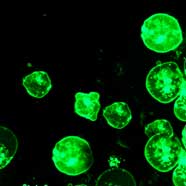
ANA HEp-2 Screen ELISA
- Regulatory Status
- EU: CE
- Kit size
- 12 x 8
- Method
- ELISA
- Incubation time
- 3 x 30 min
- Standard range
- cut-off control
- Specimen / Volumes
- 10 µL serum
- Substrate / isotope
- TMB 450 nm






ANA HEp-2 Screen ELISA is a solid phase enzyme immunoassay for the combined qualitative detection of IgG antibodies against HEp2 cells in human serum. Each well is coated with lysed HEp2 cells. The test collectively detects, in one well, total ANAs against double stranded DNA (dsDNA), histones, SS-A (Ro), SS-B (La), Sm, snRNP/Sm, Scl-70, PM-Scl, Jo-1 and centromeric antigens along with sera positive for HEp2 immunofluorescence test (IFT).
The assay is a tool in the diagnosis of systemic rheumatic diseases like systemic lupus erythematosus (SLE), mixed connective tissue diseases (MCTD), scleroderma, Sjögren`s syndrome, polymyositis and dermatomyositis.
Anti-nuclear antibodies (ANA) directed against a variety of nuclear and cytoplasmic antigens occur in high frequency in systemic rheumatic diseases and thus are an important tool for the differential diagnosis. For instance, SS-A (Ro) and SS-B (La) antibodies are associated with SLE and Sjögren’s syndrome (SS), anti-dsDNA and anti-Sm antibodies with SLE, antihistone antibodies with SLE and drug-induced lupus, anti-RNP antibodies with mixed connective tissue disease (MCTD) and SLE, anti-Scl-70 antibodies with scleroderma (progressive systemic sclerosis [PSS]), anti-Jo-1 antibodies with polymyositis and dermatomyositis and anti-centromere antibodies with CREST syndrome.
Indirect immunofluorescence test (IFT) on eucaryotic cells like HeLa and HEp2 has been the established method for the detection of ANAs. Although the IFT is a sensitive test, it is laborious when testing large numbers of patient samples and is subject to errors from human interpretation and from variability in fluorescent microscope. The ELISA test system is an excellent alternative to the IFT for screening patient`s serum for the presence of ANAs of clinical significance. Single antibody specificities have to be determined by more specific testing using ELISAs employing the specific target antigens for a simple and reliable differentiation of ANAs.
Serum samples diluted 1:101 are incubated in the microplates coated with the specific antigen. Patient´s antibodies, if present in the specimen, bind to the antigen. The unbound fraction is washed off in the following step. Afterwards anti-human immunoglobulins conjugated to horseradish peroxidase (conjugate) are incubated and react with the antigen-antibody complex of the samples in the microplates. Unbound conjugate is washed off in the following step. Addition of TMB-substrate generates an enzymatic colorimetric (blue) reaction, which is stopped by diluted acid (color changes to yellow). The intensity of color formation from the chromogen is a function of the amount of conjugate bound to the antigen-antibody complex and this is proportional to the initial concentration of the respective antibodies in the patient sample.
For concrete data please consult the Instruction for Use in the download box on the top right side.
Our comprehensive immunoassay portfolio includes a number of specialty diagnostic immunoassays for endocrinology, immunology and autoimmunity, as well as for diagnosis of multiple infectious diseases. We are pioneers and market leaders in saliva diagnostics, with over 40 years of experience supplying a broad portfolio of luminescence- and ELISA-based tests, including our highly acclaimed HMGB1 and MuSK-Ab ELISAs.
And as experts in laboratory automation, we can support our customers with the protocols for open ELISA platforms, such as the Freedom EVOlyzer or Thunderbolt®.
All products are only available for sale to laboratory professionals and may not be available in all countries. Availability and regulatory status may vary across regions depending on local country-specific registration. Please always read and follow the instructions for use.
All of our assays have been designed and manufactured to meet the highest global regulatory requirements and quality standards. Tecan is certified under ISO 9001:2015, ISO 13485:2016 and is audited by a notified body according to Medical Device Single Audit Program (MDSAP).

As part of the Tecan Group, we have a leading market position in diagnostics and research, with over 40 years of experience in the development, manufacture and supply of enzyme-, radiolabel- and luminescence-based immunoassays.
Our range of high-quality immunoassays is supported by a diverse portfolio of automated solutions, making us the perfect partner for you and your customers.
At Tecan, we are driven to improve people’s lives and health.