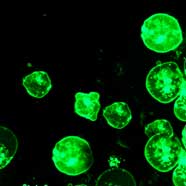
Leptospira IgG ELISA
- Regulatory Status
- EU: CE
- Kit size
- 12 x 8
- Method
- ELISA
- Incubation time
- 1 x 1h, 1 x 30min, 1 x 15min
- Standard range
- cut-off index
- Specimen / Volumes
- 10µL serum, plasma
- Substrate / isotope
- TMB 450nm






Leptospirosis (also known as Weil's syndrome) is probably the most widespread zoonosis in the world. It is caused by infection with spirochete bacteria of the genus Leptospira and affects humans as well as a broad spectrum of animal hosts. The incidence is significantly higher in warm climate countries than in temperate regions. The disease is seasonal, with peak incidence occurring in summer or fall in temperate regions, where temperature is the limiting factor in survival of leptospires, and during rainy seasons in warm climate regions, where rapid desiccation would otherwise prevent survival. Natural reservoirs for the pathogenic Leptospira interrogans include rodents as well as a large variety of domesticated mammals (e. g. pigs, cattle and dogs). Leptospires occupy the lumen of nephritic tubules in their natural host and are shed into the urine. Transmission can occur when humans are directly or indirectly exposed to the urine of infected animals or a urine-polluted environment. Leptospires gain entry into the human blood stream via cuts, skin abrasions or mucous membranes through contact with moist soil, vegetation, and contaminated waters; handling infected animal tissues; and ingestion of food and water. Leptospires are rarely transmitted from human to human. The incubation period is usually 5-14 days, with a range of 2-30 days. The spectrum of clinical symptoms is extremely wide. The vast majority of leptospiral infections are either subclinical or result in very mild illness and recover without any complications Clinical manifestations of leptospirosis range from mild influenza-like symptoms to severe life-threatening disease forms, characterized by jaundice, renal failure, bleeding and severe pulmonary hemorrhage. The clinical presentation of leptospirosis is biphasic, with the acute or septicemic phase lasting about a week, followed by the immune phase, characterized by antibody production and excretion of leptospires in the urine. Most of the complications of leptospirosis are associated with localization of leptospires within the tissues during the immune phase and thus occur during the second week of the illness. The classical syndrome of Weil’s disease represents only the most severe presentation. It is characterized by jaundice, renal failure, hemorrhage and myocarditis with arrhythmias. The presence of pathogen resp. infection may be identified by • Pathogen detection: dark-field microscopy, culture from blood, urine, cerebrospinal fluid or tissues • PCR • Serology: microscopic agglutination (MAT) test, ELISA.
Distributed by Tecan, IBL International GmbH.
For concrete data please consult the Instruction for Use in the download box on the top right side.
Our comprehensive immunoassay portfolio includes a number of specialty diagnostic immunoassays for endocrinology, immunology and autoimmunity, as well as for diagnosis of multiple infectious diseases. We are pioneers and market leaders in saliva diagnostics, with over 40 years of experience supplying a broad portfolio of luminescence- and ELISA-based tests, including our highly acclaimed HMGB1 and MuSK-Ab ELISAs.
And as experts in laboratory automation, we can support our customers with the protocols for open ELISA platforms, such as the Freedom EVOlyzer or Thunderbolt®.
All products are only available for sale to laboratory professionals and may not be available in all countries. Availability and regulatory status may vary across regions depending on local country-specific registration. Please always read and follow the instructions for use.
All of our assays have been designed and manufactured to meet the highest global regulatory requirements and quality standards. Tecan is certified under ISO 9001:2015, ISO 13485:2016 and is audited by a notified body according to Medical Device Single Audit Program (MDSAP).

As part of the Tecan Group, we have a leading market position in diagnostics and research, with over 40 years of experience in the development, manufacture and supply of enzyme-, radiolabel- and luminescence-based immunoassays.
Our range of high-quality immunoassays is supported by a diverse portfolio of automated solutions, making us the perfect partner for you and your customers.
At Tecan, we are driven to improve people’s lives and health.