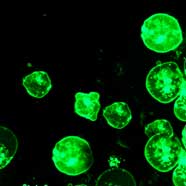
Rubella virus IgM µ-capture ELISA
- Regulatory Status
- EU: CE
- Kit size
- 12 x 8
- Method
- ELISA
- Incubation time
- 1 x 1 h, 1 x 30 min, 1 x 15 min
- Standard range
- cut-off index
- Specimen / Volumes
- 10 µL serum
- Substrate / isotope
- TMB 450 nm






Rubella is an enveloped RNA virus belonging to the togaviruses. It has a spherical shape measuring about 50-70 nm in diameter. There appears to be only one antigenic type, and no cross-reactivity with alphaviruses or other members of the togavirus group has been found. Rubella viruses are pathogens of the respiratory tract and transmitted mainly by droplet infection. Rubella is a worldwide common contagious disease with mild constitutional symptoms and a generalized rush. In childhood, it is an inconsequential illness, but when it occurs during pregnancy, there is a significant risk of severe damage to the fetus. The risk of congenital rubella depends primarily on the month of pregnancy in which infection is acquired: overall, app. 16% of infants have major defects at birth following maternal rubella in the first 3 months of pregnancy. Congenital rubella infection may lead to a syndrome with single or multiple organ involvements, known as embryopathia rubeolosa. In some cases infection is inapparent but results in consequential damages as eye defects, deafness, growth retardation, and others. Naturally acquired immunity usually is long-lasting, but reinfection is possible due to decreasing levels of circulating antibodies. For immunization a vaccine containing live virus is used. Infection may be identified by
Distributed by Tecan, IBL International GmbH.
For concrete data please consult the Instruction for Use in the download box on the top right side.
Our comprehensive immunoassay portfolio includes a number of specialty diagnostic immunoassays for endocrinology, immunology and autoimmunity, as well as for diagnosis of multiple infectious diseases. We are pioneers and market leaders in saliva diagnostics, with over 40 years of experience supplying a broad portfolio of luminescence- and ELISA-based tests, including our highly acclaimed HMGB1 and MuSK-Ab ELISAs.
And as experts in laboratory automation, we can support our customers with the protocols for open ELISA platforms, such as the Freedom EVOlyzer or Thunderbolt®.
All products are only available for sale to laboratory professionals and may not be available in all countries. Availability and regulatory status may vary across regions depending on local country-specific registration. Please always read and follow the instructions for use.
All of our assays have been designed and manufactured to meet the highest global regulatory requirements and quality standards. Tecan is certified under ISO 9001:2015, ISO 13485:2016 and is audited by a notified body according to Medical Device Single Audit Program (MDSAP).

As part of the Tecan Group, we have a leading market position in diagnostics and research, with over 40 years of experience in the development, manufacture and supply of enzyme-, radiolabel- and luminescence-based immunoassays.
Our range of high-quality immunoassays is supported by a diverse portfolio of automated solutions, making us the perfect partner for you and your customers.
At Tecan, we are driven to improve people’s lives and health.