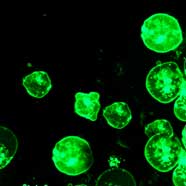
MuSK-Ab ELISA
- Regulatory Status
- EU: CE IVDR
- Kit size
- 12 x 8
- Method
- ELISA
- Incubation time
- 3 x 1h, 1 x 30 min
- Standard range
- 0 - 12 U/ml
- Specimen / Volumes
- 10µl serum
- Substrate / isotope
- PNPP 405 nm
additional resources






The measurement of autoantibodies against MuSK supports the diagnosis of myasthenia gravis (MG), a long-term muscle disease leading to muscle weakness of varying severity. In diagnostics, the determination of autoantibodies against MuSK is used especially in patients who have tested negative for autoantibodies against the acetylcholine receptor (AChR, 70% of AChR-Ab seronegative patients show autoantibodies against MuSK). The MuSK-Ab ELISA is appropriate as an aid for use in the diagnosis of Myasthenia Gravis. The comprehensive detection of antibodies is necessary for the diagnosis and treatment of MG. tTherefore, the determination of both MuSK antibodies and autoantibodies against the Acetylcholine Receptor (AChR) are usually performed simultaneously. For classification of the myasthenic subgroup a further diagnostic investigation is necessary. A subgroup will not be clearly defined using the anti- MuSK antibody ELISA. The MuSK-Ab ELISA is a solid phase enzyme-linked immunosorbent assay (ELISA), based on the principle of competitive binding and measured on an absorbance reader. The assay is semi-automated requiring general purpose laboratory instruments and consumables such as absorbance microplate reader/washer, vortexer and pipettes to execute the test. The assay is adaptable by laboratory personnel to automate on open ELISA based liquid handler platforms; however, the programming of the steps and timing required by the manual kit assay test instructions must be strictly adhered to and verified by the laboratory. Test results are calculated from a standard curve and compared to defined cut-off. The test kit is intended for professional laboratory use by trained personnel. The test kit is not for home or lay person use.
The measurement of autoantibodies against the muscle specific receptor kinase tyrosinase (MuSK) supports the diagnosis of Myasthenia gravis (MG), a rare but long-term muscle disease leading to muscle weakness of varying severity. Patients with MuSK-associated MG typically have more severe and rapidly progressive clinical symptoms with involvement of the facial, bulbar and respiratory muscle. [1-3]
Myasthenia gravis is an antibody-mediated autoimmune disease of the neuromuscular junction. The examination of patients suspected of MG is usually performed with multiple antibody determinations. In the case of acetylcholine receptor (AChR) seronegativity, the presence of other antibodies such as those against MuSK or Lrp4, can support the diagnosis of an existing MG disease in AChR-seronegative patients.[4,5] Studies emphasized the importance of evaluation of anti-MuSK and anti-LRP4 antibodies also in patients with anti-AChR antibodies.[6]
In approximately 80% of patients, auto-antibodies to AChR are present. 70% of AChR-Ab–seronegative MG patients have serum auto-antibodies against the MuSK. [7] The determination of anti-MuSK autoantibodies is an important and essential tool for the diagnosis of MG. The result provides a reliable indication of Myasthenia gravis disease.
Bartoccioni et al. reported that in individual cases as well as in the whole population, a correlation between Ab levels and disease severity can be found.[8] The device MuSK-Ab ELISA can be used as a qualitative assay which allows a positive/negative statement using cut-off value. Cut-off of IBL International’s device was confirmed through results in peer-reviewed literature. Furthermore the device can be used as semi-quantitative test setup, specified in units, which allows comparison of data of individual patients by follow-up measurements during treatment to observe patient’s disease status.
Auto-Ab against MuSK are determined in serum using ELISA technology or immunoprecipitation assay.[3,7] IBL International’s MuSK-Ab ELISA correlates well with immunoprecipitation assay (IPA/RIA). ELISA is an adequate replacement for RIA, as the results correlate well but, for example, the use of radioactivity will be avoided. ELISA technology is easily accessible for small and large laboratories and requires less specialized equipment and facility controls. D-penicillamine can cause anti-AChR and anti-MuSK antibody-positive MG, a rare phenomenon, which is reversed after discontinuation of D-penicillamine treatment.[9] For definition of the myasthenic subgroup further diagnostic investigation is necessary. Subgroup will not be clearly defined using the anti- MuSK antibody ELISA.
*Product availability and regulatory status may vary across regions outside the EU depending on local country-specific registration. CE IVD under IVDR to be launched soon. Consult with your Tecan associate for further information.
For concrete data please consult the Instruction for Use in the download box on the top right side.
Our comprehensive immunoassay portfolio includes a number of specialty diagnostic immunoassays for endocrinology, immunology and autoimmunity, as well as for diagnosis of multiple infectious diseases. We are pioneers and market leaders in saliva diagnostics, with over 40 years of experience supplying a broad portfolio of luminescence- and ELISA-based tests, including our highly acclaimed HMGB1 and MuSK-Ab ELISAs.
And as experts in laboratory automation, we can support our customers with the protocols for open ELISA platforms, such as the Freedom EVOlyzer or Thunderbolt®.
All products are only available for sale to laboratory professionals and may not be available in all countries. Availability and regulatory status may vary across regions depending on local country-specific registration. Please always read and follow the instructions for use.
All of our assays have been designed and manufactured to meet the highest global regulatory requirements and quality standards. Tecan is certified under ISO 9001:2015, ISO 13485:2016 and is audited by a notified body according to Medical Device Single Audit Program (MDSAP).
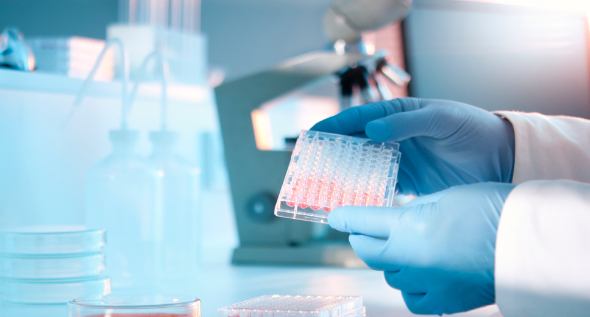
As part of the Tecan Group, we have a leading market position in diagnostics and research, with over 40 years of experience in the development, manufacture and supply of enzyme-, radiolabel- and luminescence-based immunoassays.
Our range of high-quality immunoassays is supported by a diverse portfolio of automated solutions, making us the perfect partner for you and your customers.
At Tecan, we are driven to improve people’s lives and health.