Steroid Panel LC-MS
- Regulatory Status
- EU: CE
- Kit size
- 96
- Method
- LC-MS
- Incubation time
- LC-MS run time 10 min + 6 min
- Standard range
- see below
- Specimen / Volumes
- 250 µL serum, plasma (EDTA)
- Substrate / isotope
- NA






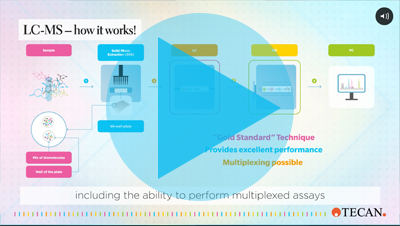
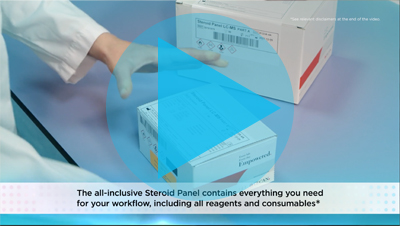
In our two videos, each about 4:40 long, we introduce to you this new product line and explain the workflow.
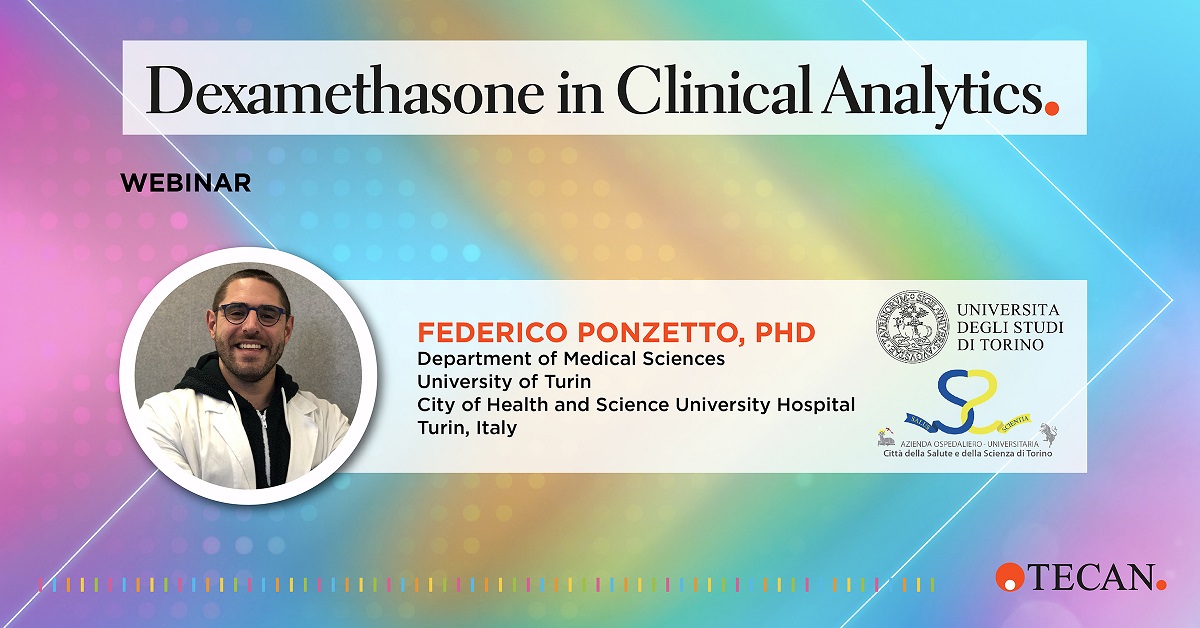
Also watch the video below to learn about dexamethasone and its clinical use!
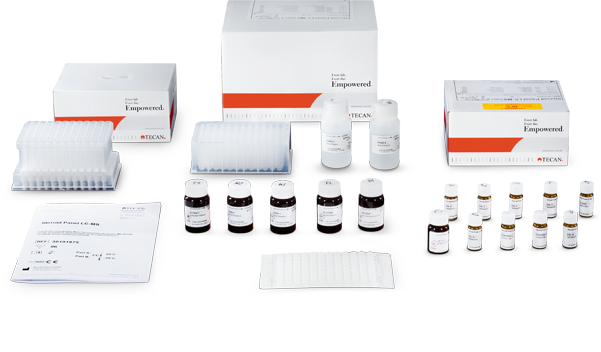
The Steroid Panel LC-MS Kit is a CE-IVD reagent kit for the measurement of 18 steroids from human plasma (EDTA) and serum using solid phase extraction and liquid chromatography-mass spectrometry technology. The analytes are 17 naturally occurring steroid hormones including 11-deoxycorticosterone 11-deoxycortisol, 17-hydroxypregnenolone, 17-hydroxyprogesterone, 21-deoxycortisol, aldosterone, androstenedione, corticosterone, cortisol, cortisone, dehydroepiandrosterone, dehydroepiandrosterone sulfate, dihydrotestosterone, estradiol, estrone, progesterone, testosterone and the synthetic glucocorticoid drug dexamethasone.
Steroid hormones are important signaling molecules that regulate many important physiological and the underlying biochemical processes. They are typically divided into two large groups based on their primary physiological roles: corticosteroids mostly from adrenal cortex and sex steroids mostly from gonads and placenta1,2. Corticosteroids are further divided into mineralocorticoids and glucocorticoids. The former is involved in salt and water balance, while the latter is involved in energy metabolism. Sex steroids are further categorized into progestogens, androgens and estrogens for their roles in pregnancy, male and female sexual developments. Measurement of steroids as physiological markers for fertility is helpful for monitoring health status. Steroid hormones exert their functions by binding to their respective receptors and trigger either gene expression events or kinase signaling3,4.
The enzymes responsible for the biosynthesis of steroid hormones can be classified into two groups, cytochrome P450 (CYP) and hydroxysteroid dehydrogenases (HSD). Loss-of-function and gain-of-function mutations of many of these genes lead to disruption of hormone homeostasis and cause many different disease conditions.5 Endocrine disorders like congenital adrenal hyperplasia, aromatase deficiency, and apparent mineralocorticoid excess syndrome have strong genetic associations, while certain cases of hyperandrogenism, amenorrhea, and adrenal insufficiency are also caused by these enzyme lesions.5
Neoplasm is one other common cause of steroid hormone related disorders like Cushing’s syndrome, aldosteronism or adrenal incidentaloma, and often associated with altered hormone levels.6–8 Given steroids’ central roles in regulating sexual development, fertility related diagnosis often also includes steroid testing.9,10 Premature adrenarche can cause hyperandrogenism and polycystic ovarian syndrome later on and affect fertility.11
Given the strong association of steroid hormones and endocrine disorders, steroid testing has become an integral part in diagnostic procedures and is recommended by many clinical practice guidelines.6,8,12–14 LC-MS based assays have evolved into the gold standard and considered state of the art in steroid hormone testing,15-18and their use have also been endorsed by clinical practice guidelines.6,12
The calibrator ranges covered by this kit are:
| Analyte | Calibrator ranges ng/mL |
|---|---|
| 11-Deoxycorticosterone | 0.04 - 5.13 |
| 17-hydroxyprogesterone | 0.10 - 12.82 |
| 21-Deoxycortisol | 0.10 - 12.82 |
| Aldosterone | 0.10 - 4.59 |
| Androstenedione | 0.10 - 12.82 |
| Corticosterone | 0.30 - 38.47 |
| Dexamethasone | 0.50 - 64.12 |
| DHEA | 1.0 - 45.9 |
| DHEAS | 50 - 6412 |
| Dihydrotestosterone | 0.15 - 1.57 |
| Cortisone | 0.5 - 64.1 |
| Cortisol | 2.0 - 256.5 |
| Progesterone | 0.10 - 12.82 |
| 11-Deoxycortisol | 0.10 - 12.82 |
| Testosterone | 0.04 - 13.42 |
| 17-Hydroxypregnenolone | 0.30 - 38.47 |
| Estrone | 0.01 - 1.28 |
| Estradiol | 0.03 - 3.85 |
For concrete data please consult the Instruction for Use in the download box on the top right side.
(1) Greaves, R. F.; Jevalikar, G.; Hewitt, J. K.; Zacharin, M. R. A Guide to Understanding the Steroid Pathway: New Insights and Diagnostic Implications. Clinical Biochemistry 2014, 47 (15), 5–15. https://doi.org/10.1016/j.clinbiochem.2014.07.017.
(2) Schiffer, L.; Barnard, L.; Baranowski, E. S.; Gilligan, L. C.; Taylor, A. E.; Arlt, W.; Shackleton, C. H. L.; Storbeck, K.-H. Human Steroid Biosynthesis, Metabolism and Excretion Are Differentially Reflected by Serum and Urine Steroid Metabolomes: A Comprehensive Review. The Journal of Steroid Biochemistry and Molecular Biology 2019, 194, 105439. https://doi.org/10.1016/j.jsbmb.2019.105439.
(3) Beato, M.; Klug, J. Steroid Hormone Receptors: An Update. Human Reproduction Update 2000, 6 (3), 225–236. https://doi.org/10.1093/humupd/6.3.225.
(4) Levin, E. R.; Hammes, S. R. Nuclear Receptors Outside the Nucleus: Extranuclear Signalling by Steroid Receptors. Nat Rev Mol Cell Biol 2016, 17 (12), 783–797. https://doi.org/10.1038/nrm.2016.122.
(5) Miller, W. L.; Auchus, R. J. The Molecular Biology, Biochemistry, and Physiology of Human Steroidogenesis and Its Disorders. Endocrine Reviews 2011, 32 (1), 81–151. https://doi.org/10.1210/ER.2010-0013.
(6) Fleseriu, M.; Auchus, R.; Bancos, I.; Ben-Shlomo, A.; Bertherat, J.; Biermasz, N. R.; Boguszewski, C. L.; Bronstein, M. D.; Buchfelder, M.; Carmichael, J. D.; Casanueva, F. F.; Castinetti, F.; Chanson, P.; Findling, J.; Gadelha, M.; Geer, E. B.; Giustina, A.; Grossman, A.; Gurnell, M.; Ho, K.; Ioachimescu, A. G.; Kaiser, U. B.; Karavitaki, N.; Katznelson, L.; Kelly, D. F.; Lacroix, A.; McCormack, A.; Melmed, S.; Molitch, M.; Mortini, P.; Newell-Price, J.; Nieman, L.; Pereira, A. M.; Petersenn, S.; Pivonello, R.; Raff, H.; Reincke, M.; Salvatori, R.; Scaroni, C.; Shimon, I.; Stratakis, C. A.; Swearingen, B.; Tabarin, A.; Takahashi, Y.; Theodoropoulou, M.; Tsagarakis, S.; Valassi, E.; Varlamov, E. V.; Vila, G.; Wass, J.; Webb, S. M.; Zatelli, M. C.; Biller, B. M. K. Consensus on Diagnosis and Management of Cushing’s Disease: A Guideline Update. The Lancet Diabetes & Endocrinology 2021, 9 (12), 847–875. https://doi.org/10.1016/S2213-8587(21)00235-7.
(7) Vilela, L. A. P.; Almeida, M. Q. Diagnosis and Management of Primary Aldosteronism. Archives of Endocrinology and Metabolism 2017, 61 (3), 305–312. https://doi.org/10.1590/2359-3997000000274.
(8) Fassnacht, M.; Arlt, W.; Bancos, I.; Dralle, H.; Newell-Price, J.; Sahdev, A.; Tabarin, A.; Terzolo, M.; Tsagarakis, S.; Dekkers, O. M. Management of Adrenal Incidentalomas: European Society of Endocrinology Clinical Practice Guideline in Collaboration with the European Network for the Study of Adrenal Tumors. European Journal of Endocrinology 2016, 175 (2), G1–G34. https://doi.org/10.1530/EJE-16-0467.
(9) Jarow, J. P. Endocrine Causes of Male Infertility. Urologic Clinics 2003, 30 (1), 83–90. https://doi.org/10.1016/S0094-0143(02)00117-9.
(10) Unuane, D.; Tournaye, H.; Velkeniers, B.; Poppe, K. Endocrine Disorders & Female Infertility. Best Pract Res Clin Endocrinol Metab 2011, 25 (6), 861–873. https://doi.org/10.1016/j.beem.2011.08.001.
(11) Utriainen, P.; Laakso, S.; Liimatta, J.; Jääskeläinen, J.; Voutilainen, R. Premature Adrenarche - A Common Condition with Variable Presentation. Hormone Research in Paediatrics 2015, 83 (4), 221–231. https://doi.org/10.1159/000369458.
(12) Speiser, P. W.; Arlt, W.; Auchus, R. J.; Baskin, L. S.; Conway, G. S.; Merke, D. P.; Meyer-Bahlburg, H. F. L.; Miller, W. L.; Murad, M. H.; Oberfield, S. E.; White, P. C. Congenital Adrenal Hyperplasia Due to Steroid 21-Hydroxylase Deficiency: An Endocrine Society Clinical Practice Guideline. The Journal of Clinical Endocrinology & Metabolism 2018, 103 (11), 4043–4088. https://doi.org/10.1210/JC.2018-01865.
(13) Nieman, L. K.; Biller, B. M. K.; Findling, J. W.; Newell-Price, J.; Savage, M. O.; Stewart, P. M.; Montori, V. M.; Edwards, H. The Diagnosis of Cushing’s Syndrome: An Endocrine Society Clinical Practice Guideline. The Journal of Clinical Endocrinology & Metabolism 2008, 93 (5), 1526–1540. https://doi.org/10.1210/JC.2008-0125.
(14) Bornstein, S. R.; Allolio, B.; Arlt, W.; Barthel, A.; Don-Wauchope, A.; Hammer, G. D.; Husebye, E. S.; Merke, D. P.; Murad, M. H.; Stratakis, C. A.; Torpy, D. J. Diagnosis and Treatment of Primary Adrenal Insufficiency: An Endocrine Society Clinical Practice Guideline. The Journal of Clinical Endocrinology & Metabolism 2016, 101 (2), 364–389. https://doi.org/10.1210/JC.2015-1710.
(15) Krone, N.; Hughes, B. A.; Lavery, G. G.; Stewart, P. M.; Arlt, W.; Shackleton, C. H. L. Gas Chromatography/Mass Spectrometry (GC/MS) Remains a Pre-Eminent Discovery Tool in Clinical Steroid Investigations Even in the Era of Fast Liquid Chromatography Tandem Mass Spectrometry (LC/MS/MS). The Journal of Steroid Biochemistry and Molecular Biology 2010, 121 (3), 496–504. https://doi.org/10.1016/j.jsbmb.2010.04.010.
(16) Grebe, S. K.; Singh, R. J. LC-MS/MS in the Clinical Laboratory – Where to From Here? Clin Biochem Rev 2011, 32 (1), 5–31.
(17) Conklin, S. E.; Knezevic, C. E. Advancements in the Gold Standard: Measuring Steroid Sex Hormones by Mass Spectrometry. Clinical Biochemistry 2020, 82, 21–32. https://doi.org/10.1016/j.clinbiochem.2020.03.008.
(18) Seger, C.; Salzmann, L. After Another Decade: LC–MS/MS Became Routine in Clinical Diagnostics. Clinical Biochemistry 2020, 82, 2–11. https://doi.org/10.1016/j.clinbiochem.2020.03.004.
Our comprehensive immunoassay portfolio includes a number of specialty diagnostic immunoassays for endocrinology, immunology and autoimmunity, as well as for diagnosis of multiple infectious diseases. We are pioneers and market leaders in saliva diagnostics, with over 40 years of experience supplying a broad portfolio of luminescence- and ELISA-based tests, including our highly acclaimed HMGB1 and MuSK-Ab ELISAs.
And as experts in laboratory automation, we can support our customers with the protocols for open ELISA platforms, such as the Freedom EVOlyzer or Thunderbolt®.
All products are only available for sale to laboratory professionals and may not be available in all countries. Availability and regulatory status may vary across regions depending on local country-specific registration. Please always read and follow the instructions for use.
All of our assays have been designed and manufactured to meet the highest global regulatory requirements and quality standards. Tecan is certified under ISO 9001:2015, ISO 13485:2016 and is audited by a notified body according to Medical Device Single Audit Program (MDSAP).

As part of the Tecan Group, we have a leading market position in diagnostics and research, with over 40 years of experience in the development, manufacture and supply of enzyme-, radiolabel- and luminescence-based immunoassays.
Our range of high-quality immunoassays is supported by a diverse portfolio of automated solutions, making us the perfect partner for you and your customers.
At Tecan, we are driven to improve people’s lives and health.